


By Community Property Care on Nov 12, 2026, 10:00:03 AM
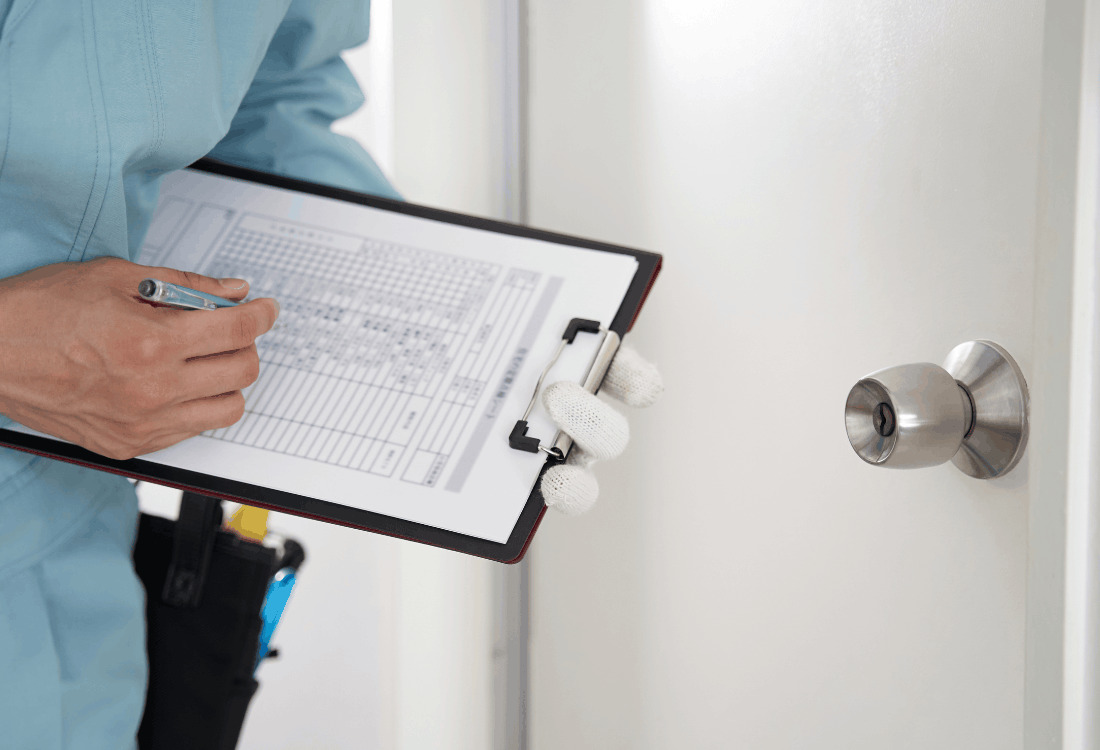
For Property Managers responsible for residential developments, fire door inspection frequency should be based on more than a fixed calendar. The right inspection programme depends on the building, the type and location of the door, occupancy, previous defects, applicable legal requirements, and findings from the Fire Risk Assessment (FRA).
Understanding how often fire doors should be inspected helps Property Managers distinguish between statutory routine checks, more detailed professional inspections, and situations where additional monitoring may be appropriate.
A structured inspection programme can help identify defects earlier, support fire-safety responsibilities, and provide clearer records of actions taken across a residential portfolio.

What Determines Fire Door Inspection Frequency?
There is no single inspection frequency that is suitable for every fire door in every residential building.
The appropriate schedule should take account of several factors, including:
- Building Type And Height: Applicable legal requirements may differ depending on the building and its height.
- Door Location: High-use communal and cross-corridor doors may experience more wear than lower-use riser or service cupboard doors.
- Occupancy And Usage: Buildings with higher resident movement or heavily used communal routes may require closer monitoring.
- Previous Defects: Doors with repeated issues, such as damaged closers, excessive gaps, or resident tampering, may need more frequent attention.
- Fire Risk Assessment Findings: The FRA may identify particular doors, areas, or risks that require a more frequent or detailed inspection regime.
- Manufacturer And Maintenance Information: Available doorset information, maintenance instructions, and relevant guidance should also inform the inspection programme.
Property Managers should therefore avoid applying the same fire door inspection frequency across every door without considering the specific risk profile of the building.
How Often Should Fire Doors Be Inspected In England?
In England, the Fire Safety (England) Regulations 2022 set specific requirements for fire door checks in certain multi-occupied residential buildings.
Where the top storey is more than 11 metres above ground level, Responsible Persons must:
- Check fire doors in communal areas at least every three months.
- Use best endeavours to check flat entrance fire doors at least every 12 months.
These are routine Regulation 10 checks designed to identify obvious damage or defects that could affect the operation of the door.
The statutory minimum is not necessarily the only factor that determines fire door inspection frequency. Building use, occupancy, door location, repeated defects, and findings from the FRA may justify more frequent checks or more detailed professional inspection.
For example, a heavily used cross-corridor fire door may deteriorate more quickly than a low-use riser cupboard door. A building where doors are repeatedly wedged open, damaged, or affected by self-closing faults may also require closer monitoring.
Routine Regulation 10 Checks And Detailed Inspections Are Different
Property Managers should distinguish between the routine checks required under Regulation 10 and a more detailed professional fire door inspection.
Routine Regulation 10 checks are basic visual checks designed to identify obvious issues, such as damage, a door failing to close properly, or problems with visible components.
CPC’s BlueSky-certified fire door inspections provide a more detailed, structured assessment. Our standard inspections are visual and non-intrusive and can include measurements, photographic evidence, defect identification, and formal reporting.
Where in scope, inspections may cover:
- Flat entrance doors.
- Communal fire doors.
- Cross-corridor doors.
- Riser doors.
- Service cupboard doors.
- Similar fire doors across the building.
Concealed or inaccessible elements are not included within CPC’s standard inspection, although intrusive investigation can be arranged separately where required.
When More Frequent Fire Door Inspections May Be Needed
Statutory minimums provide an important baseline, but they should not automatically be treated as the optimum inspection frequency for every building.
More frequent checks may be appropriate where:
- Doors experience particularly high levels of daily use.
- Previous inspections have identified recurring defects.
- Self-closing devices are frequently damaged or adjusted.
- Doors are repeatedly wedged or obstructed.
- Residents or contractors regularly move large items through protected routes.
- The FRA identifies increased risk or recommends closer monitoring.
- Recent remedial work requires follow-up verification.
The inspection schedule should therefore remain proportionate to the level of risk and the condition of the doors over time.
This risk-based approach helps Property Managers focus attention where it is most needed while maintaining a clear and manageable inspection programme.
What Should Be Considered During A Detailed Fire Door Inspection?
Fire door inspection requirements will depend on the type of inspection being carried out and the particular door concerned.
A detailed visual and non-intrusive inspection may consider visible and accessible elements such as:
- Door Leaf And Frame: Condition, damage, alignment, warping, or visible alterations.
- Door Gaps: Gaps around the door assessed against relevant guidance and available doorset information.
- Self-Closing Devices: Whether the door closes fully into the frame as intended.
- Hinges And Ironmongery: Visible condition, fixings, damage, or signs of inappropriate alteration.
- Seals: The condition of intumescent strips or smoke seals where present.
- Glazing: Visible damage or alterations to glazed elements where applicable.
- Signage And Use: Whether the door is being obstructed, wedged open, or otherwise prevented from operating correctly.
CPC’s BlueSky-certified inspection process provides structured measurements, photographs, defect records, and formal reporting to help Property Managers understand the condition of the doors inspected and any follow-up actions required.
Fire Door Inspection Requirements Should Reflect The FRA
The Fire Risk Assessment plays an important role in determining the appropriate inspection and maintenance approach for a building.
The FRA may identify particular fire doors or areas that require closer attention because of:
- Building layout.
- Occupancy profile.
- Escape strategy.
- Previous defects.
- Changes to the building.
- Repeated damage or misuse.
- Wider compartmentation concerns.
Property Managers should therefore consider fire door inspection requirements alongside the FRA rather than relying only on statutory minimum frequencies.
Where the FRA identifies specific concerns, a more detailed inspection or increased monitoring frequency may be appropriate.
Clear Inspection And Remedial Records Should Be Maintained
Carrying out fire door inspections is only part of effective fire-door management. Property Managers should also maintain clear records showing what was checked, when the inspection took place, what defects were identified, and what follow-up action was taken.
Records may include:
- The date of the inspection.
- The location or door reference.
- The type and scope of the inspection.
- Photographic evidence.
- Measurements where relevant.
- Defects or observations identified.
- Recommended remedial works.
- Details of repairs completed.
- Retesting or closure evidence where appropriate.
For flat entrance doors subject to Regulation 10 requirements, records should also reflect the steps taken to carry out checks, including where access could not be obtained.
Clear inspection records help Property Managers maintain visibility over outstanding defects, completed repairs, and the condition of fire doors across their portfolio.
Fire Door Requirements Differ Across The UK
The Fire Safety (England) Regulations 2022 apply in England.
Property Managers responsible for buildings in Wales should not assume that the same Regulation 10 inspection frequencies automatically apply. Fire-door inspection arrangements should instead reflect the fire-safety legislation, guidance, Fire Risk Assessment, and maintenance requirements relevant to the property.
For portfolios covering more than one UK jurisdiction, inspection programmes should therefore be tailored to the requirements that apply to each building rather than using one standard schedule across every site.
How CPC Supports Fire Door Inspection Programmes
Community Property Care supports Property Managers with BlueSky-certified fire door inspections, structured reporting, photographic evidence, defect identification, and remedial works across residential developments.
CPC’s standard inspections are visual and non-intrusive and can cover flat entrance, communal, cross-corridor, riser, service cupboard, and similar fire doors where in scope.
Our structured inspection process provides measurements, photographs, defect records, and formal reporting beyond the basic routine visual checks required under Regulation 10.
Where defects are identified, CPC can complete a broad range of remedial works and coordinate more substantial repairs or replacements where required. This helps Property Managers move from inspection through to resolution while reducing the need to coordinate multiple contractors.
Need Support Managing Fire Door Inspection Frequency?
Community Property Care helps Property Managers establish practical fire door inspection programmes that reflect the building, its Fire Risk Assessment, applicable legal requirements, and identified risks.
With BlueSky-certified inspections, photographic evidence, structured reporting, and access to remedial support, CPC can help Property Managers maintain clearer visibility over fire-door condition, identified defects, and follow-up actions across their portfolio.
Get in touch with CPC to discuss fire door inspections, reporting, and remedial works tailored to your residential developments.

Image Source: Envato
No Comments Yet
Let us know what you think