


By Community Property Care on Sep 15, 2026, 11:00:01 AM
Residential property managers constantly balance competing priorities under significant time pressure. Handling daily resident enquiries, coordinating contractor schedules, and managing service charge budgets leaves little time for complex regulatory administration.

However, staying on top of legislative changes remains vital for protecting residents, maintaining estate values, and reducing operational risk across your portfolio. Navigating requires clear administrative processes, reliable site intelligence, and trustworthy service partners who understand the practical realities of block management.
By taking a structured approach to building safety, managing agents can protect their properties while creating simpler, more efficient routines for their internal teams.
What Building Safety Act Compliance Means
Introduced following the Grenfell Tower tragedy and the subsequent review of building safety, the Building Safety Act received Royal Assent in April 2022. The new regime was introduced in phases, with the principal requirements for occupied higher-risk buildings in England becoming operational from October 2023. These changes established clearer legal accountability and placed greater emphasis on continuously assessing, managing and evidencing fire and structural safety risks
For the purposes of the in-occupation regime in England, a higher-risk building is generally one that is at least 18 metres in height or has at least seven storeys, and contains at least two residential units. Buildings meeting these criteria are subject to enhanced regulatory oversight and additional duties for Accountable Persons and Principal Accountable Persons.
Accountable Persons vs Property Managers
Understanding the distinction between legal roles is essential for managing professional risk effectively. The law creates distinct legal roles, each with specific statutory duties and responsibilities.
- Accountable Person (AP): A person or corporate body holding an obligation to repair or maintain common parts of a building. Accountable Persons have legal duties relating to the assessment and management of building safety risks within the parts of the building for which they are responsible.
- Principal Accountable Person (PAP): Where multiple APs exist on a complex development, the PAP takes the lead on registering the building with the regulator and coordinating the overall safety case strategy.
- Property Manager: Property managers do not automatically hold Accountable Person status, although this depends on the specific ownership, repair, and maintenance responsibilities for the building. Instead, property managers can support compliance by coordinating routine inspections, managing specialist contractors, arranging remedial works, and maintaining site records.
Clarifying these roles ensures everyone involved in estate management understands their specific boundaries, operational duties, and legal obligations.
An AP or PAP may appoint a managing agent or competent contractor to carry out activities on its behalf, but it cannot delegate its legal accountability for the safety of the building.
The Practical Challenges For Property Managers
In practice, Property Managers may need to establish who holds each legal responsibility, work with incomplete inherited building records, coordinate multiple specialist contractors, manage access to residents’ doors and ensure that defects are not simply reported but followed through to completion. Maintaining a consistent audit trail across numerous buildings, assets and contractors can become one of the most demanding parts of the process.
How The Building Safety Act Fits With Existing Fire Safety Law
The Building Safety Act sits alongside existing fire safety legislation, including the Regulatory Reform (Fire Safety) Order 2005. The Fire Safety Order applies to non-domestic parts of multi-occupied residential buildings, such as communal corridors and stairways, and places duties on the Responsible Person to assess and manage fire risks.
From 1 October 2023, Section 156 of the Building Safety Act strengthened requirements under the Fire Safety Order, including the recording of fire risk assessments and fire safety arrangements, as well as information sharing and cooperation between Responsible Persons and, where applicable, Accountable Persons.
Property Managers therefore need to understand how these different responsibilities interact, particularly when coordinating fire safety inspections, maintenance and compliance records across residential buildings.
Supporting The Golden Thread With Accurate Records
For higher-risk buildings, the Building Safety Act Golden Thread provides a structured approach to keeping accurate, accessible, and up-to-date building safety information throughout the building's lifecycle.
Inspection reports, maintenance logs, asset registers, and statutory certificates contribute directly to building this accurate record. However, collecting raw documentation does not automatically constitute a compliant system on its own. Information must be kept accurate, up to date, readable, and organised logically so it can be accessed quickly when required.
For property managers supporting higher-risk buildings, understanding the Golden Thread Building Safety Act requirements is important for maintaining accurate and accessible safety information.
- Digital Storage: Keep all safety records, certificates, and reports in an easily retrievable digital format.
- Clear Traceability: Ensure every repair, maintenance task, or inspection links directly to a specific date, asset, and site location.
- Portfolio Consistency: Standardise reporting formats and documentation standards across your entire property portfolio to avoid compliance gaps.
A structured approach to Golden Thread Building Safety Act record keeping can also make it easier to retrieve relevant information when it is needed.
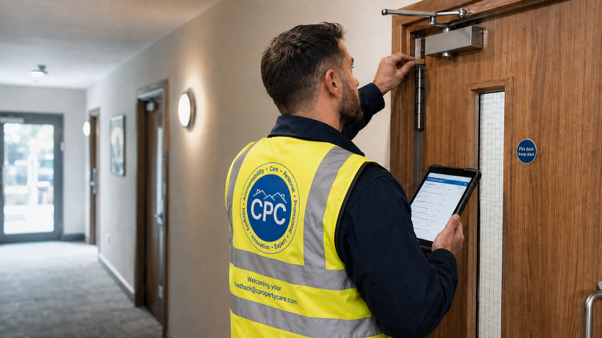
Fire door remedials provide a practical example of why this information matters. Before components such as hinges, closers, seals or glazing are replaced, the specification and available certification for the existing doorset should be understood so that compatible products and appropriate remedial methods can be selected. The subsequent record should show what was identified, what action was taken, the materials or components used and the evidence of completion.
CPC’s digital inspection and reporting processes support this evidence trail by linking findings, photographs and remedial actions to the relevant door, location and date. Where essential specification or certification information is unavailable, this should be identified before remedial decisions are made
A well-maintained Golden Thread can help managing agents access the information needed for regulatory requirements, developer handovers, or property transfers.
Planned Inspections And Maintenance Support Compliance
Proactive maintenance programmes can help prevent safety gaps, extend equipment life, and reduce the likelihood of costly emergency repairs. Waiting for critical building components to fail creates significant compliance risk and leads to avoidable resident complaints.
Regular site checks should cover essential fire safety features, including communal fire doors, compartmentation seals, dry risers, and emergency lighting systems. Required inspections, servicing, and testing should be scheduled in line with the relevant legal requirements, fire risk assessments, standards, and manufacturer guidance. Arranging prompt remedial works helps prevent minor defects identified during site visits from developing into more significant safety issues or requiring more extensive remedial work.
Accurate Records Provide Evidence Of Compliance
In modern property management, completing a physical safety check or repair is only part of the task. Clear records should also demonstrate what work was completed, when it was carried out, and any findings or remedial actions identified. Reliable, multi-service contractors can provide valuable oversight on site, delivering clear, structured evidence following relevant inspections and maintenance visits.
High-quality compliance evidence should always include:
- Time-stamped photographs clearly showing completed works, site conditions, and rectified defects.
- Detailed defect logs highlighting required remedial actions and safety priorities for property managers.
- Relevant certificates and documentation for statutory inspections, fire door checks, and system testing.
- Clear audit trails documenting exactly when issues were identified, quoted, and successfully resolved.
Having access to robust evidence helps managing agents demonstrate actions taken, streamline internal reporting, and maintain clear oversight across their properties.
A Structured Compliance Programme Reduces Risk
Managing multiple separate specialist contractors across a large block management portfolio often leads to administrative overload, communication breakdowns, and missed actions. Consolidating services into a structured, proactive maintenance programme can simplify site operations and contractor management.
Coordinated maintenance schedules ensure fire door checks, communal repairs, cleaning, and grounds care align efficiently. Working alongside a trusted, multi-service partner reduces the time spent chasing paperwork, reviewing incomplete reports, or managing unreliable suppliers. This structured approach helps property managers lower operational risk, protect building safety, and deliver consistent, high-quality standards across every site they manage.
Need Support With Building Safety And Compliance?
Community Property Care supports Property Managers with fire door inspections and remedials, emergency lighting checks, planned maintenance and evidence-led reporting across residential portfolios.
As a Bluesky-certified provider of fire door inspections, CPC offers independently assessed competence alongside digital reporting that links findings, photographs and completed remedial actions to the relevant site, asset and date. This helps managing agents maintain clear audit trails and reduces the time spent chasing contractors, remedial updates and supporting documentation.
Speak to Community Property Care about fire safety inspections, appropriate remedial works and evidence-led property maintenance.
No Comments Yet
Let us know what you think