


By Community Property Care on Oct 1, 2026, 11:00:01 AM
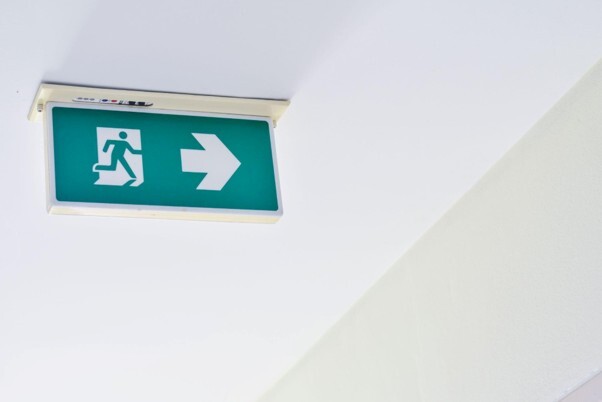
Between handling resident queries, managing maintenance budgets, and dealing with unexpected site issues, fire-safety responsibilities can quickly add to the workload of residential Property Managers. Emergency lighting forms an important part of fire-safety provision in residential blocks, providing illumination to relevant escape routes if the normal lighting supply fails.

Understanding responsibility for testing emergency lights, arranging appropriate checks, and recording the results can help Property Managers maintain effective fire-safety arrangements and clearer maintenance records.
The Responsible Person Holds Legal Responsibility
Under the Regulatory Reform (Fire Safety) Order 2005, the Responsible Person has duties relating to fire safety in the parts of residential buildings covered by the legislation. Depending on the ownership and management arrangements, there may also be more than one Responsible Person with responsibilities for different aspects of the premises.
The Responsible Person must ensure appropriate fire precautions are provided and maintained. Testing and maintenance tasks can be carried out by suitably competent people or contractors, but appointing another person to complete the work does not remove the Responsible Person’s underlying duties.
For Property Managers supporting the Responsible Person, having clear testing schedules, maintenance records, and processes for reporting faults can make emergency lighting easier to manage across multiple residential developments.
Who Can Test Emergency Lighting?
Property Managers often ask who can test emergency lighting on site. The answer depends on the competence of the individual and the type of work being undertaken.
Routine monthly functional checks can be carried out by suitably competent personnel who understand the emergency-lighting system, the testing process, and how to record the results correctly. This does not necessarily mean the person must hold the job title of electrician.
CPC has team members with relevant electrical experience and competence who can undertake emergency-lighting testing, electrical investigation, fault diagnosis, and appropriate remedial work where the task falls within their competence.
Where work falls outside the competence of the person attending, or requires additional testing, certification, or notification, the issue should be escalated appropriately.
Monthly Emergency Lights Testing Requirements
Regular testing helps identify whether emergency lighting is operating as intended and highlights faults that may require further investigation.
Relevant British Standards, including BS 5266-1 and BS EN 50172, provide recognised guidance on emergency lighting, including appropriate testing and maintenance arrangements.
CPC carries out routine monthly emergency-lighting testing internally. This standard short functional, or flick, test confirms that emergency fittings operate when the normal lighting supply fails, with any faults identified and recorded against the site.
Monthly emergency lights testing may include:
- Simulating A Supply Failure: Operating an appropriate test facility, such as a key switch or other suitable method, to simulate failure of the normal lighting supply.
- Checking Emergency Fittings: Walking relevant escape routes and confirming that emergency lighting fittings illuminate as expected.
- Checking Fittings And Signage: Looking for visible damage to fittings, diffusers, and appropriate safety signage.
- Restoring Normal Power: Restoring the normal lighting supply and checking relevant charge indicators or other system indications where applicable.
These regular checks can help identify failed lamps, battery issues, or other faults so appropriate investigation or maintenance can be arranged.
Annual Testing Requires A Longer Duration Check
While monthly checks focus on basic functionality, annual full-duration testing assesses whether emergency lighting can continue operating for its required duration.
CPC can carry out annual full-duration testing on request, subject to the site arrangements and the work being completed by suitably competent personnel.
During the test, the appropriate test facility is operated, allowing the emergency lighting to run for the required duration. The fittings are monitored for performance, the normal supply is then restored, and the results are recorded.
Any fittings that fail to operate correctly or maintain illumination for the required duration should be identified for further investigation or remedial action.
The timing of full-duration emergency lights testing also needs to be planned carefully. Emergency-lighting batteries require recharge time following a full discharge, so testing should be scheduled with the site’s operational and fire-safety requirements in mind.
Fault Investigation And Remedial Works
Where emergency-lighting faults are identified, suitably competent CPC team members can investigate the issue further and, where appropriate, carry out remedial work.
Selected competent CPC technicians can complete straightforward like-for-like replacement of failed emergency luminaires and other appropriate electrical components. Following replacement, the fitting is tested, and the work, outcome, and post-work testing are recorded against the site.
Competent CPC personnel may also undertake electrical investigation, testing, and fault diagnosis where this falls within their experience and competence.
Where the nature or complexity of the work falls outside the competence of the person attending, or where additional testing, certification, or notification is required, CPC can escalate the issue accordingly.
This provides a clear pathway from identifying a fault through to investigation, appropriate repair or replacement, testing, recording, and escalation where necessary.
Records Must Be Kept After Testing
Carrying out tests is only part of effective emergency-lighting management. Clear records should also be maintained so Property Managers and Responsible Persons have visibility over completed checks, identified faults, investigations, and follow-up actions.
When testing emergency lights, maintaining a consistent record of completed checks, identified defects, and remedial action helps create a clearer audit trail across residential developments.
Records may include:
- The date and time of the test.
- The person carrying out the check.
- The areas or fittings included in the test.
- Any fittings that failed to operate correctly.
- Any fittings that failed to maintain illumination for the required duration.
- Details of fault investigation, repairs, or like-for-like replacements.
- The outcome of post-work testing and any subsequent retesting.
Maintaining clear records provides useful evidence of testing, identified faults, remedial work, and subsequent outcomes, helping Property Managers understand how emergency lighting is being managed across their sites.
A consistent record-keeping process also makes it easier to identify recurring issues, monitor outstanding actions, and maintain visibility across multiple residential developments.
How CPC Reduces Property Manager Workload
Keeping track of monthly schedules, annual testing, faults, remedial works, and records across a multi-site portfolio can consume valuable Property Manager time.
CPC provides a joined-up emergency-lighting service that can include monthly functional testing, annual full-duration testing on request, fault investigation, reporting, and appropriate remedial works.
Where competent to do so, CPC technicians can investigate faults and complete straightforward like-for-like replacement of failed emergency luminaires or other appropriate electrical components. The work is then tested and recorded. Where an issue falls outside the competence of the person attending, or requires additional certification, testing, or notification, it is escalated appropriately.
This approach gives Property Managers greater visibility over testing schedules, identified faults, remedial actions, and outstanding requirements while reducing the need to coordinate multiple suppliers.
Need Support With Emergency Lighting Testing?
Community Property Care supports Property Managers with monthly testing emergency lights, annual full-duration testing on request, fault investigation, reporting, and appropriate remedial works across residential developments.
Our suitably competent personnel can carry out testing, investigate faults, complete appropriate like-for-like replacements, and record the outcome of work undertaken. Where an issue requires additional expertise, testing, certification, or notification, CPC can escalate it accordingly.
With structured reporting and clear site records, CPC helps Property Managers maintain visibility over completed checks, failed fittings, remedial works, and follow-up actions across their residential portfolio.
Speak to Community Property Care about emergency lights testing, fault investigation, reporting, and remedial support across your residential developments.
Image Source: Envato

Biodiversity Net Gain Guidance: What Property Managers Need To Know
Building Safety Act 2022 Compliance: A Practical Guide For Property Managers In England
No Comments Yet
Let us know what you think