


By Community Property Care on Nov 5, 2026, 10:00:03 AM
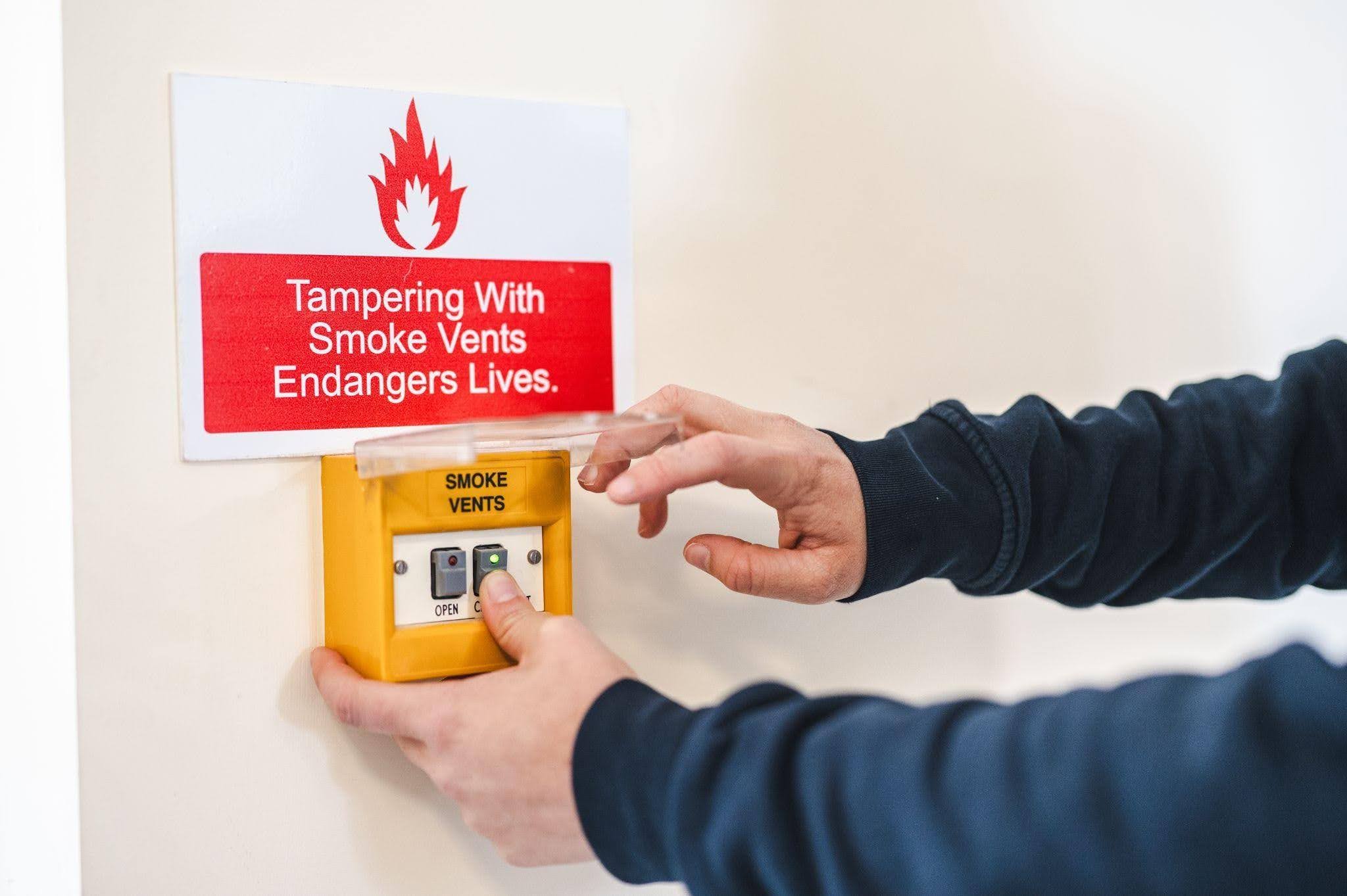
Automatic Opening Vent (AOV testing) systems are important life-safety assets in many residential developments. In the event of a fire, these smoke-control systems can open windows, vents, or roof outlets to help manage smoke in communal areas and support the building’s fire-safety strategy.

For Property Managers overseeing residential developments, ensuring these systems operate as intended is an important operational responsibility. Understanding the relevant AOV testing requirements can help Property Managers maintain effective smoke-control systems, support fire-safety compliance, and keep clear maintenance records.
AOV Testing Should Follow The Building's Fire Strategy
Every residential block has its own design characteristics, layout, occupancy profile, and fire-safety arrangements. Smoke-control maintenance should therefore reflect the site-specific Fire Strategy, current Fire Risk Assessment (FRA), system design, and manufacturer guidance.
A standard off-the-shelf checklist may not be appropriate for every building. AOV testing should confirm that the system responds as intended for the specific property.
Whether a building uses natural smoke shafts, mechanically assisted systems, staircase vents, or other forms of smoke control, checks should reflect the intended sequence of operation and the equipment installed.
Manual Controls, Actuators, And Smoke Vents Should Be Tested
Physical components exposed to weather, regular operation, and the building environment should be inspected and maintained appropriately.
Key elements that may be assessed during AOV testing include:
- Manual Control Points (MCPs): Where provided, manual control points should be tested to confirm that the system responds correctly to manual activation.
- Actuators And Drive Arms: Mechanical drives should operate smoothly without signs of sticking, obstruction, damage, corrosion, or other issues that could affect performance.
- Vent Windows And Louvres: Vents should open and close in accordance with the system design and should be checked for visible damage, obstruction, or operational problems.
- Physical Clearances: External roof vents, wall louvres, and other openings should remain clear of debris, vegetation, bird nesting material, or other obstructions that could affect operation.
Control Panels And Indicators Should Be Checked
The central control panel provides important information about the status of the smoke-control system.
During routine checks, technicians should look for fault lights, system warnings, or unacknowledged error messages that may indicate an issue requiring investigation.
The panel should indicate the correct system status, respond appropriately during testing, and return to its normal state once the system is reset.
Any persistent faults or abnormal indicators should be recorded and investigated by a suitably competent person.
Power Supplies And Detection System Interfaces Should Be Checked
Smoke-control systems may rely on interfaces between electrical power supplies, fire detection systems, alarm systems, control panels, and ventilation equipment.
Where the AOV system interfaces with fire detection or alarm systems, testing should confirm that the smoke-control system responds correctly to the relevant activation signal.
Backup power supplies should also be checked in accordance with the system design, manufacturer guidance, and maintenance requirements. Battery condition, charge status, and any associated fault indicators may form part of the assessment.
Testing should reflect the actual system installed rather than assuming every AOV arrangement operates in the same way.
How Often Should AOV Be Tested In Residential Blocks?
There is no single testing schedule that should be applied to every AOV system. The required frequency depends on the building’s fire strategy, Fire Risk Assessment, system design, manufacturer instructions, and applicable maintenance guidance.
For relevant residential buildings, routine monthly checks commonly confirm that the smoke-control system responds correctly to associated fire detection or alarm signals and to any manual controls provided.
More detailed inspection, testing, and servicing should then be completed at the intervals specified for the system. This will typically include annual competent-person maintenance, alongside any additional checks required by the manufacturer, fire strategy, or maintenance regime.
Property Managers should therefore avoid relying on a generic timetable and ensure their AOV testing schedule reflects the actual smoke-control system installed at the building.
When considering how often should AOV be tested, the starting point should always be the building-specific fire-safety documentation and maintenance requirements rather than a one-size-fits-all testing frequency.
Faults And Remedial Actions Should Be Recorded
Carrying out tests is only part of effective AOV management. Property Managers should also maintain clear records of completed checks, identified faults, investigations, and follow-up actions.
Site records may include:
- The date, time, and location of each test.
- The person carrying out the check.
- The system, zone, vent, or control point tested.
- Any mechanical, electrical, or control-panel faults identified.
- Details of obstructions, damaged components, or abnormal system behaviour.
- Required repairs, parts replacement, or further investigation.
- Details of subsequent retesting and remedial work completed.
A clear audit trail helps demonstrate that testing, identified faults, and remedial actions are being managed appropriately.
Accurate reporting also gives Property Managers greater visibility over outstanding issues and helps ensure faults are not lost between inspection, quotation, repair, and retesting.
Partnering With CPC For Proactive AOV Management
Managing specialist contractors, testing schedules, fault reporting, and remedial works across a residential portfolio can create significant administrative pressure for Property Managers.
Community Property Care supports Property Managers with routine AOV testing, fault reporting, remedial works, and structured site records across residential developments.
Our teams can help coordinate routine functional testing, identify visible or operational issues, and provide clear reporting on faults requiring attention. Where remedial work is needed, CPC’s joined-up approach can help move issues from identification through to appropriate follow-up action.
This gives Property Managers clearer oversight of testing schedules, identified faults, and remedial requirements while reducing the need to coordinate multiple contractors across their portfolio.
Need Support With AOV Testing And Smoke-Control Maintenance?
Community Property Care supports Property Managers with routine AOV testing, fault reporting, remedial works, and structured site records across residential developments.
By combining regular site attendance with clear reporting and a joined-up approach to repairs, CPC can help Property Managers maintain visibility over testing schedules, identified faults, and follow-up actions across their portfolio.
Get in touch with Community Property Care to discuss AOV testing requirements, smoke-control maintenance, and remedial support.
No Comments Yet
Let us know what you think